Every day, millions of people struggle silently with their mental health. For some, it means living with constant anxiety; for others, it is the weight of depression that makes daily life difficult. While already significant before 2020, the COVID-19 pandemic has further worsened these challenges.
Why Mental Health is Worsening
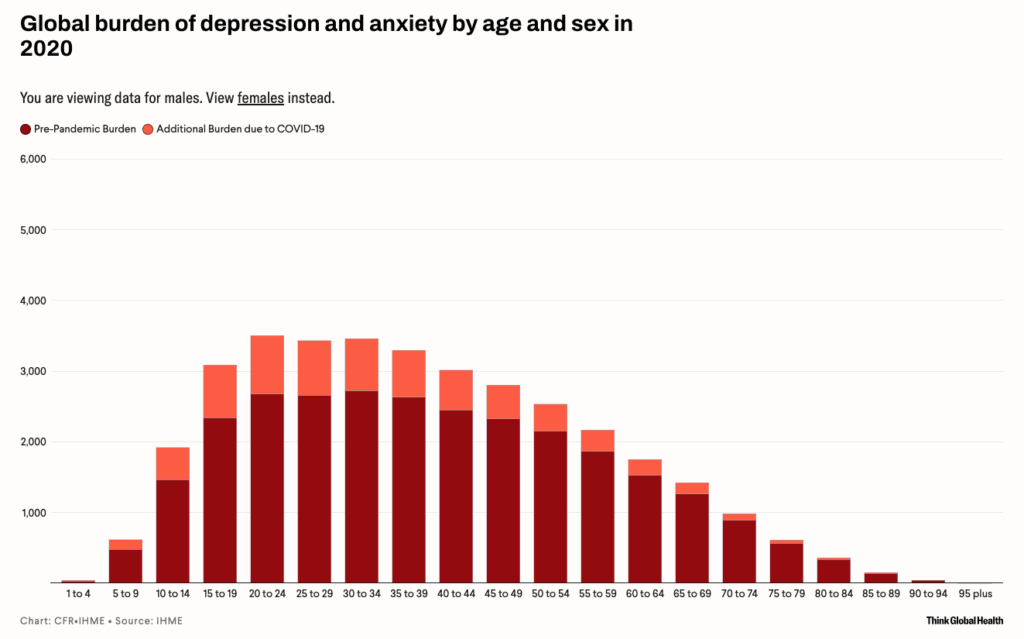
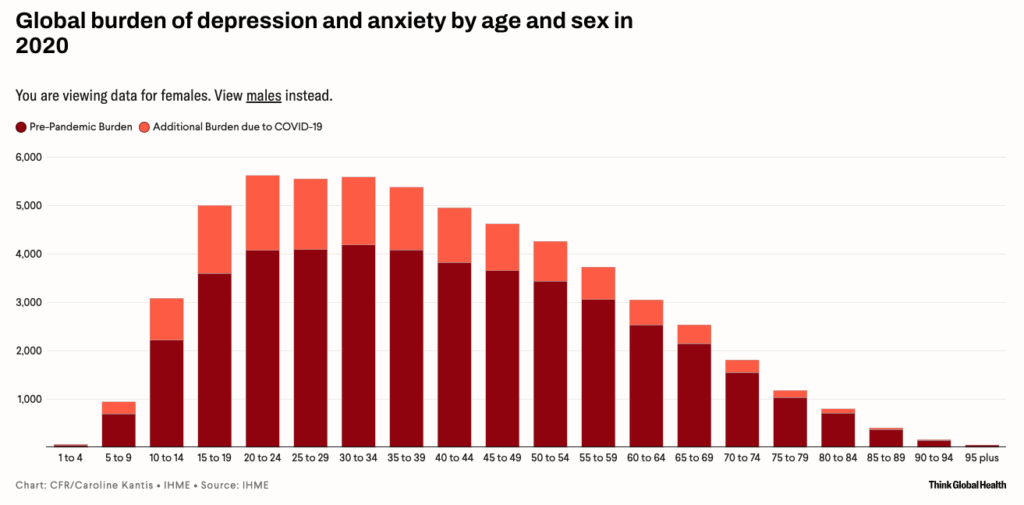
According to the World Health Organization (WHO), the global prevalence of anxiety and depression increased by 25% in the first year of the pandemic. Social isolation, uncertainty, and stress were key factors behind this surge (WHO, 2022).
By 2021, 13.9% of the world’s population was experiencing a mental health disorder — up from 13.0% in 2019 (IHME).
In the WHO South-East Asia Region, around 260 million people live with mental health conditions. Depression is now the leading cause of years of healthy life lost to disability (WHO SEARO, 2023).
Economic strain has also worsened mental health. The 2020 recession led to 33 million more unemployed people, pushing global unemployment to 220 million. Another 81 million left the labor force entirely.
While economies are slowly recovering, mental health remains fragile — impacted by ongoing conflicts, financial instability, and limited access to care. Job loss, substance use, domestic violence, and chronic illness all continue to put immense pressure on individuals and families.
Forecasts from the Global Burden of Disease Study predict that self-harm and interpersonal violence will continue to rise by 2050 if current trends persist.
The Unequal Burden: Mental Health and Inequity
The pandemic did not affect everyone equally. Women and young people bore a disproportionate mental health burden (United Nations Statistics Division).
- Women faced increased care responsibilities, domestic violence, and job losses.
- Youth unemployment soared by 8.7% in 2020, compared to 3.7% among adults.
- Informal workers — especially women — were among the hardest hit, with 1.6 billion informal workers affected by lockdowns and job insecurity.
Global burden of depression and anxiety for men (left) and women (right)
Source: IHME
These inequities are deeply connected to mental health outcomes. Unemployment and poverty are strongly correlated with depression, anxiety, and even suicidal behavior.
Vulnerable populations such as people with disabilities, migrants, and refugees face additional challenges — from financial instability to limited access to social services and ongoing geopolitical tensions.
“Mental health is both a reflection of and a contributor to social inequality.”
The Economic and Social Costs of Poor Mental Health
The cost of poor mental health is staggering — an estimated USD 6 trillion per year in lost productivity worldwide.
But beyond economic loss, millions face discrimination, stigma, and exclusion from education and employment opportunities.
Despite the scale of the issue, treatment gaps remain severe:
- 76–85% of people with severe mental disorders receive no treatment in low- and middle-income countries.
- Even in high-income countries, 35–50% of those affected go untreated.
According to WHO, up to 71% of the global anxiety disorder burden could be avoided if everyone had access to proper treatment (WHO, 2021).
Closing the Gap: What Can Be Done
1. Strengthen Mental Health Systems
The WHO Comprehensive Mental Health Action Plan 2013–2030 outlines four key objectives:
- Strengthen leadership and governance for mental health.
- Expand community-based, integrated care services.
- Implement mental health promotion and prevention strategies.
- Improve data, research, and evidence-based policy.
The principle guiding this plan is clear: “There is no health without mental health.”
2. Expand Access Through WHO’s mhGAP
The Mental Health Gap Action Programme (mhGAP) helps countries scale up services through evidence-based tools, training, and guidance — particularly in low-resource settings.
3. Empower Communities and Reduce Stigma
Civil society and community-based organizations are critical in promoting awareness, reducing stigma, and empowering those with lived experience.
Currently, organizations led by people with psychosocial disabilities exist in only 49% of low-income countries, compared to 83% in high-income ones.
Community-based initiatives, such as Thailand’s mental health promotion model, show how local engagement can make mental health care more accessible and accepted. (read more here).
A Call to Action: Building a Mentally Healthy Future
As we mark World Mental Health Day, it’s time to act. Governments, communities, and individuals must work together to:
- Strengthen access to mental health services.
- Promote awareness and understanding.
- Eliminate stigma and discrimination.
- Invest in prevention and community-based care.
Mental health is not just a medical issue — it’s a human right and a cornerstone of social and economic well-being.
Let us act now to ensure that no one is left behind.