Urban health can feel overwhelming—but you don’t need a complete strategy to start. You need the right entry point. This guide helps city practitioners identify opportunities already present in your city and turn them into real health impact
What is an Entry Point?
According to Taking a strategic approach to urban health: a guide for decision-makers by WHO,an entry point combines two elements: a favorable situation where interests, resources, and institutions align, and smart initial actions that lay groundwork for broader health strategy.
Think of entry points as your city’s existing momentum—a climate plan getting renewed funding, a housing crisis demanding attention, or a major event creating political urgency. The key is recognizing these windows and acting strategically within them.
Why Entry Points Matter?
Most cities can’t build comprehensive urban health strategies overnight. Entry points let you start where traction already exists, demonstrate value quickly, and build toward larger goals. They’re especially critical when health isn’t yet a top political priority.
How to Spot Your Entry Point
✨ If Health Is Already a Priority
Your entry point: Build programmatic foundations now.
Cities experiencing health crises, disease outbreaks, or public concern about air quality already have political attention. Use this window to establish cross-sector coordination, secure long-term funding, and embed health into stable policy frameworks.
Real example: COVID-19 opened up new entry points for cities around the world. In Paris, emergency cycling lanes created during the pandemic to help workers travel safely when public transport capacity was limited were later transformed into permanent infrastructure. What began as temporary pop-up bike lanes evolved into fully integrated routes connecting the city’s outer ring to its core, replacing car lanes and parking spaces. Similarly, many cities established new intersectoral health committees that continued to operate even after the pandemic ended.
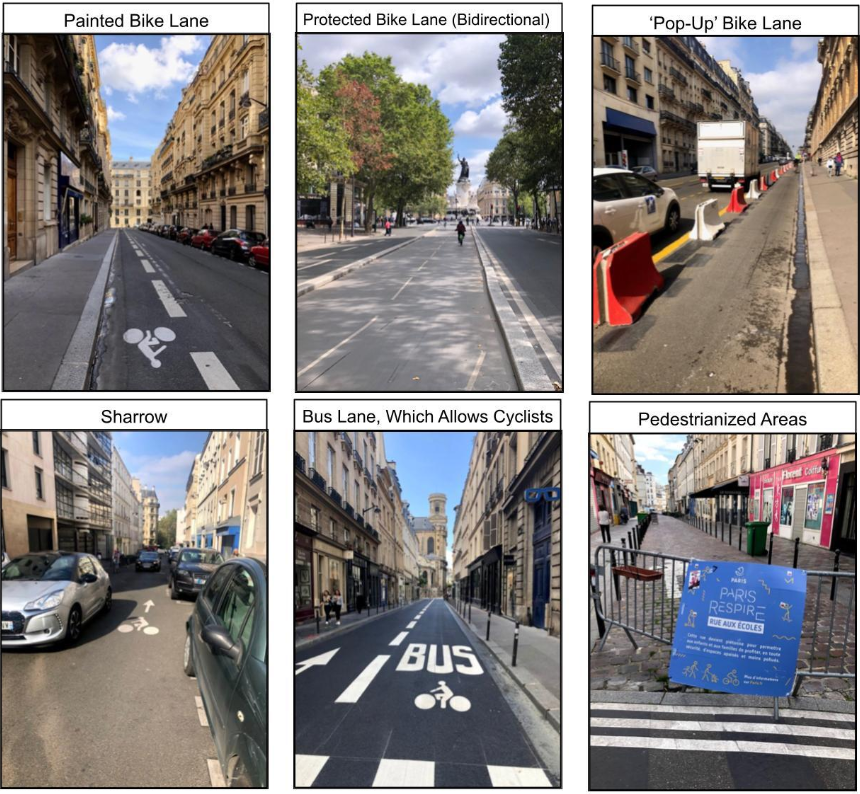
Figure 1: Categories of bike infrastructure in Paris from Transport Findings
👀 If Health Isn’t the Top Priority yet
Your entry point: Link health to high-priority issues.
Scan your city’s agenda for issues driving decisions—climate action, housing affordability, economic development, migration, aging populations. Health connects to all of them. Your job is making those connections visible and actionable. Adopt a Health-in-All-Policies approach to integrate health for intersectoral action.
Four Steps to Develop Your Entry Point
Relevant tools here can support you through this process.
1️⃣ Map the Landscape
Know what’s driving decisions in your city right now. Track budget cycles, upcoming elections, major projects, and influential stakeholders. Monitor which departments have momentum and resources.
Practical action: Create a simple tracker of ongoing cross-cutting initiatives relevant to health—housing programs, transport plans, climate budgets. Note renewal dates and expansion opportunities.
2️⃣ Identify Alignment Opportunities
Find where urban health can strengthen existing work and vice versa. Look for programs with established coordination mechanisms, proven stakeholder relationships, and stable funding that could accommodate health priorities.
Example: A comprehensive heat management strategy requires stakeholder mapping, coordination mechanisms, and resource allocation—all infrastructure that can support broader health goals when adapted strategically.
3️⃣ Build Strategic Relationships
Connect with influential actors working on high-priority issues. Understand how they engage with policy processes and what communication channels they use. Show how health advances their goals too.
WHO Urban Health Initiative example: By focusing on air pollution and clean energy access, the initiative creates natural bridges to broader health strategy through stakeholder mapping, improved communication, and intersectoral cooperation.
4️⃣ Prepare for Flexibility
Entry points are temporary—political windows shift fast. Have preliminary planning ready so you can mobilize resources quickly when opportunities emerge. Preparedness beats perfection.
Key insight: Successful entry point development depends on situational awareness (knowing when to act), preparedness (being ready to act), and understanding the agents of urban health (knowing where to act).
Urban health outcomes result from actions across multiple agents—government, private sector, civil society, academia, and communities—operating at various scales and sectors. Entry points can emerge from any sector with established coordination mechanisms and resources, not solely health departments.
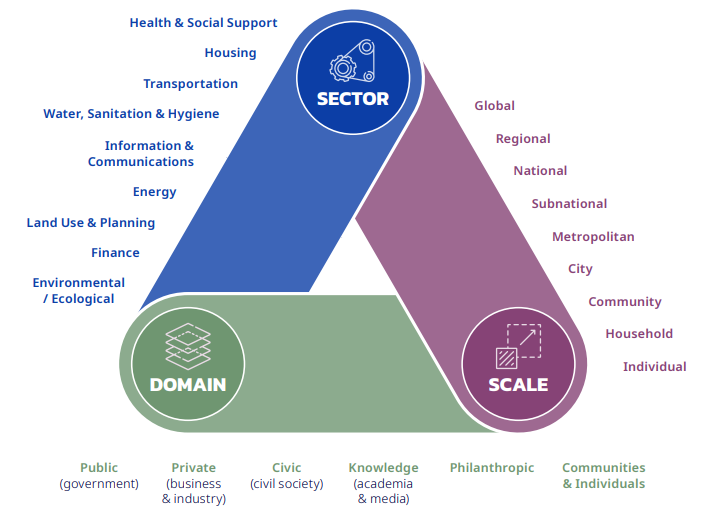
Figure 2: Agents of urban health across sectors, scales, and domains from Siri et al. (2025), F1000Research 14:144. CC BY 4.0.
Making Entry Points Stick
Entry points alone don’t guarantee sustainability. Convert them into lasting change by:
- Establishing collective mandates across departments and stakeholders
- Demonstrating ongoing value through quick wins and visible results
- Linking into stable frameworks like city masterplans or budget processes
- Securing institutional commitment and multi-year funding
Critical: Treat entry points as stepping stones, not endpoints. Articulate a timeframe for comprehensive action from the start. Build adaptive elements into initial activities to keep momentum when political winds shift.
Questions to Ask Yourself
- What cross-cutting initiatives in our city already have established coordination and funding?
- Which high-priority issues on our political agenda have clear health linkages?
- Who are the influential actors driving decisions on these issues?
- What upcoming events, budget cycles, or policy reviews create windows for action?
- Do we have preliminary plans ready to move fast when opportunities emerge?
Bottom Line
Urban health doesn’t always require new resources to begin—it requires awareness in your city’s climate plans, housing strategies, and development programs. Start with what you have, act strategically, and build from there.
Ready to take action? Start by mapping one cross-cutting initiative in your city this week. Identify how health connects to its goals and who the key decision-makers are. That’s your first entry point.
This article is adapted from WHO’s “Taking a Strategic Approach to Urban Health: A Guide for Decision-Makers” (2025), which includes comprehensive frameworks, tools, and case studies for building sustained urban health strategies.