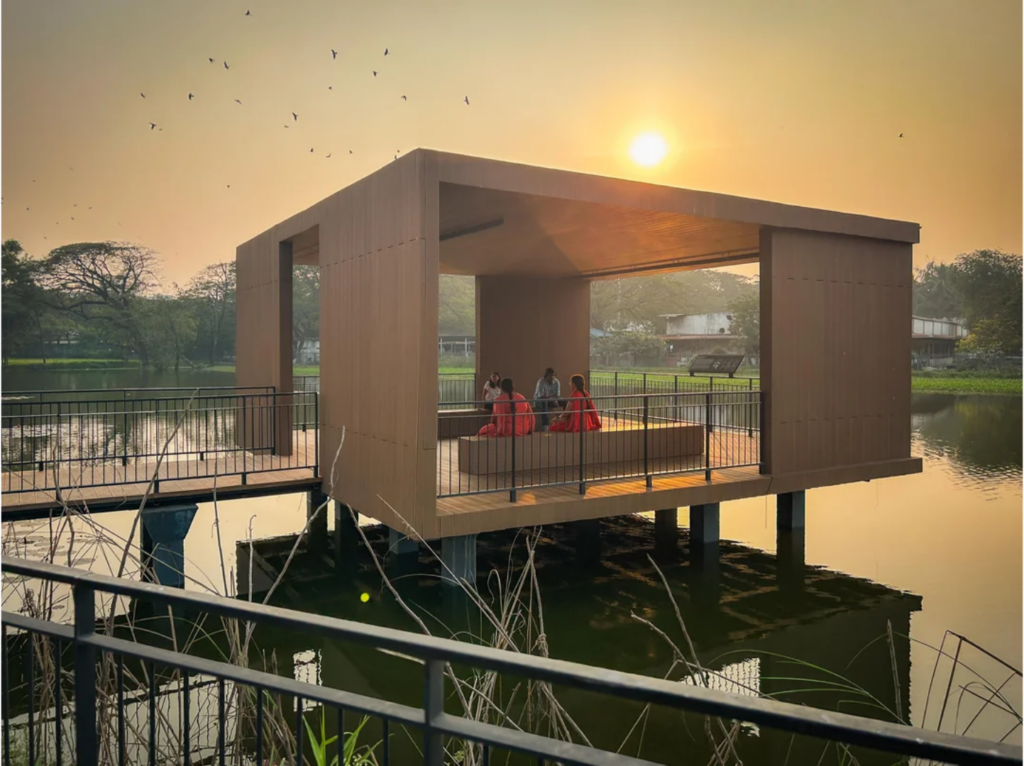
In March 2025, Chennai inaugurated its first wetland sponge park: the Dr. M.S. Swaminathan Wetland Eco Park in Porur. The sponge park Chennai India initiative marks a turning point in urban water resilience.
What was once a degraded marsh, later used as a dumping ground and asphalt parking lot, has been transformed into a 16.6-acre climate-resilient blue-green infrastructure. The initiative restored Chettiyar Agaram Lake, desilting and rehabilitating the ecosystem to serve as both a flood buffer and a vibrant public space.
For Chennai, a coastal megacity of over 12 million people, this is more than a park. It is a strategic shift in how the city manages water.
Why Sponge Park Chennai Matters for Coastal Cities
Chennai faces a dual water crisis: intensifying floods and recurring water scarcity.
- In 2015, catastrophic flooding caused an estimated USD 3 billion in damages.
- Rapid urbanisation has drastically reduced wetlands and natural water bodies.
- Encroachment and paved surfaces have increased runoff and reduced groundwater recharge.
Instead of draining stormwater away as quickly as possible, the Porur sponge park follows a different philosophy: slow, store, filter, and recharge.
This reflects the growing global movement toward sponge cities—urban areas designed to absorb rainfall like natural landscapes.
An Urban Reservoir for Flood and Drought
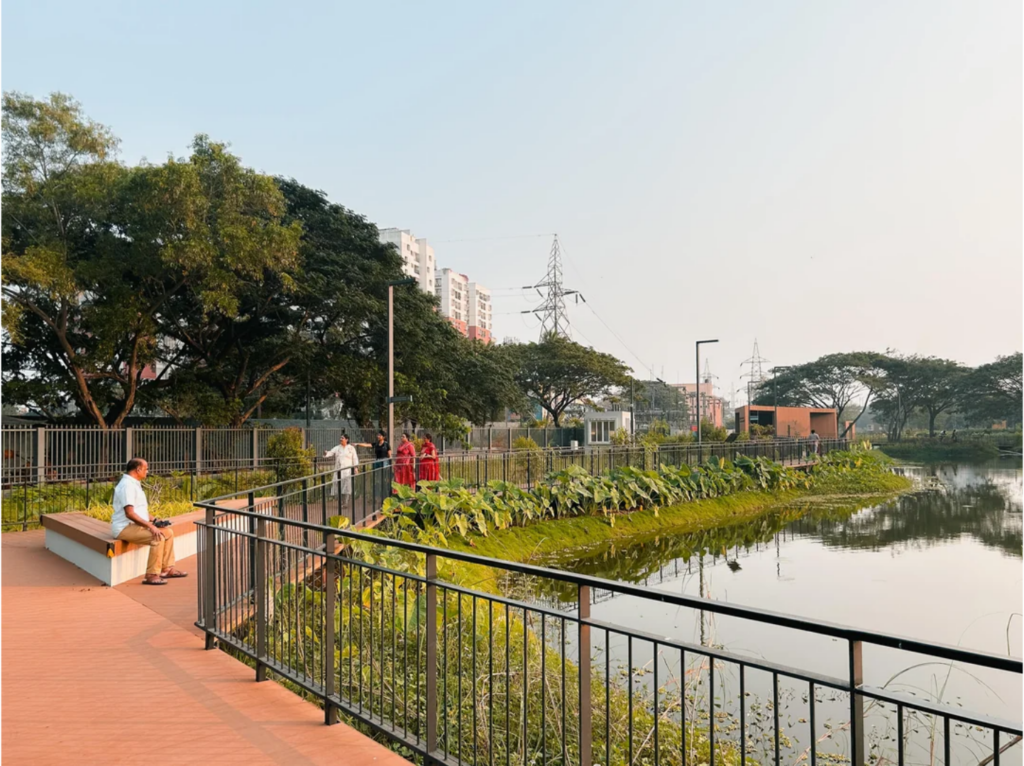
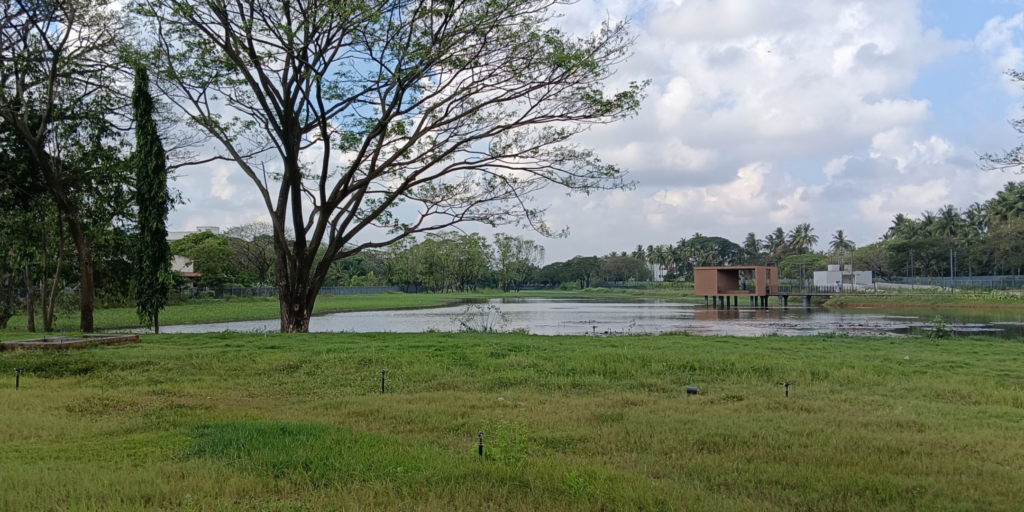
At the heart of the park lies the restored Chettiyar Agaram Lake. Through desilting and ecological restoration, the lake now holds up to 30 million litres of water during the monsoon. By deepening the lake by approximately five feet, designers expanded storage volume while also improving shallow aquifer recharge.
The sponge park reduces flood impacts by collecting and filtering up to 90% of the stormwater generated by the adjacent university campus before it enters public drainage systems.
Unlike conventional flood-control systems that move water away immediately, this wetland acts as a temporary holding tank during heavy rainfall. Outlet gates allow water levels to be managed before extreme storms, reducing downstream flood risk.
This makes the park not just a flood mitigation tool—but also a drought resilience asset.
How the Sponge Works
The park guides stormwater through a layered ecological design:
- Bioswale – Vegetated channels slow runoff and begin filtration.
- Sedimentation Pond – Silt and debris settle out.
- Aeration Basin – Water is oxygenated through gravel beds and sloped surfaces
- Phytoremediation Pond – Native wetland plants absorb nutrients such as nitrogen and phosphorus.
- Retention Basin – Treated water enters the restored lake for storage and groundwater recharge
This layered approach mimics natural wetland systems, demonstrating how engineered ecosystems can replicate ecological processes.
Biodiversity and Urban Cooling
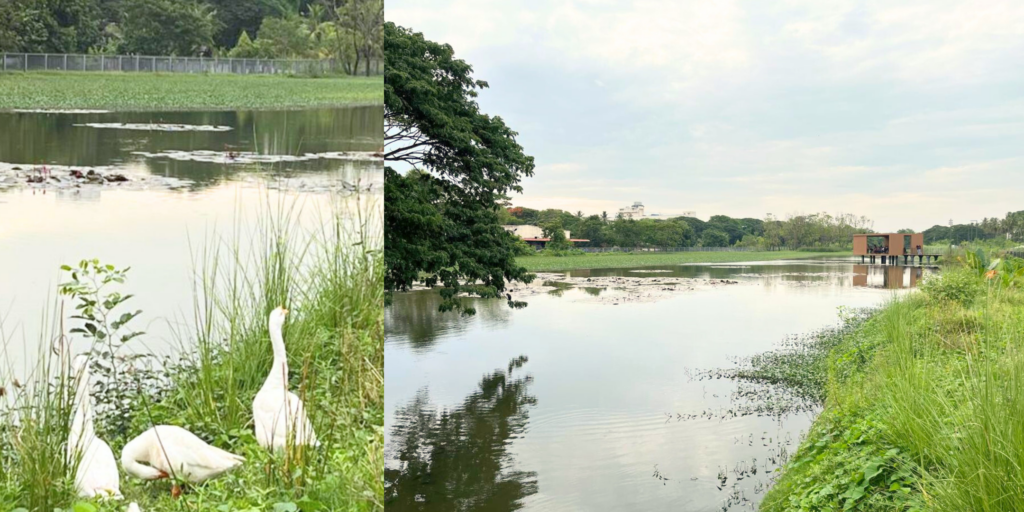
The wetland has become a habitat for urban biodiversity, supporting over 85 species of native plants, trees, shrubs, and wetland vegetation. It also provides habitat for migratory birds along the Central Asian Flyway.
Beyond flood control, the park mitigates extreme heat through increased canopy cover and green space. In a city where green cover has declined significantly over recent decades, this ecological restoration is critical for climate regulation.
A Public Space Rooted in Ecology
Unlike many sponge parks that function purely as infrastructure, the Porur sponge park was intentionally designed as a multi-functional community space.
Key features include:
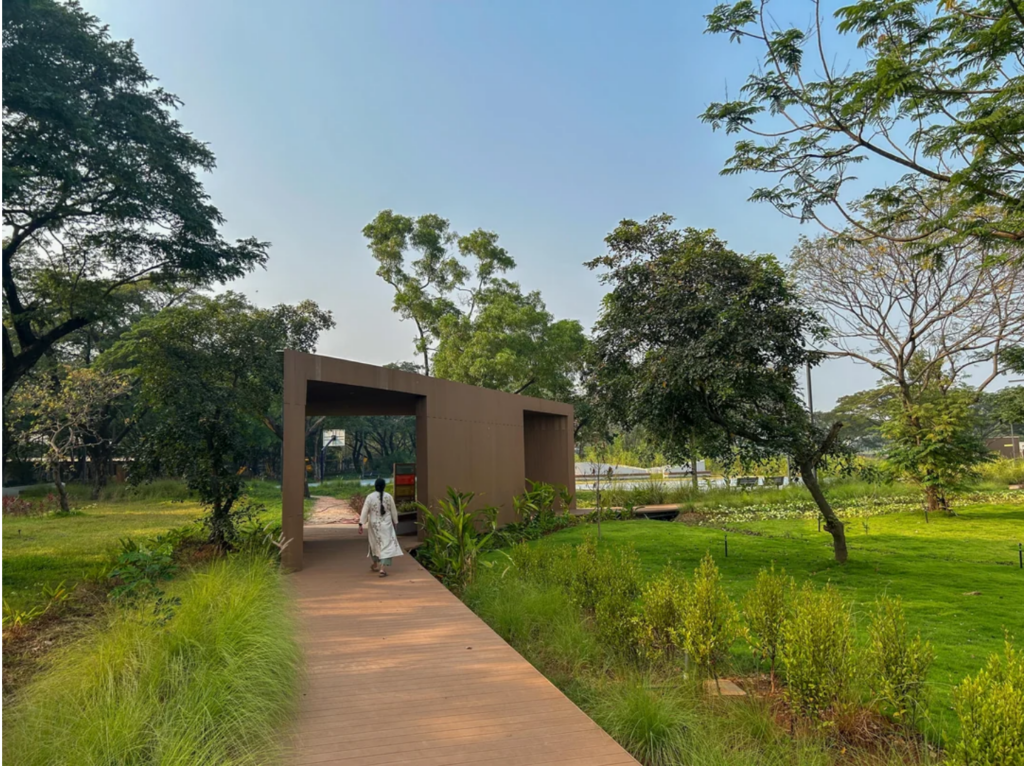
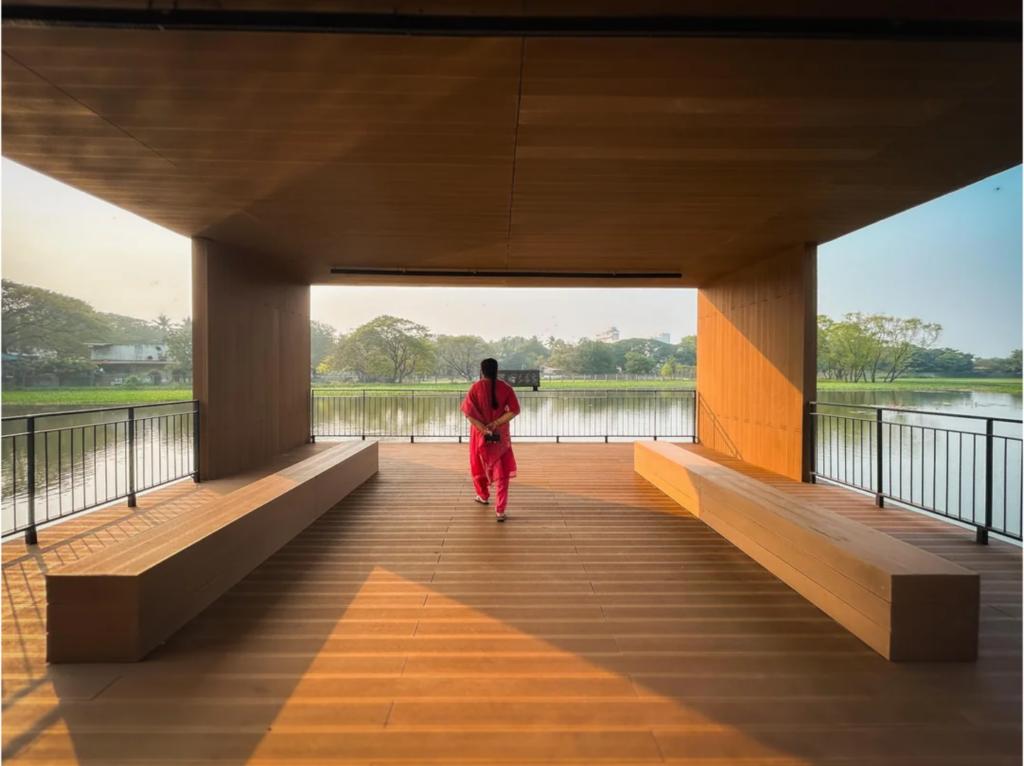
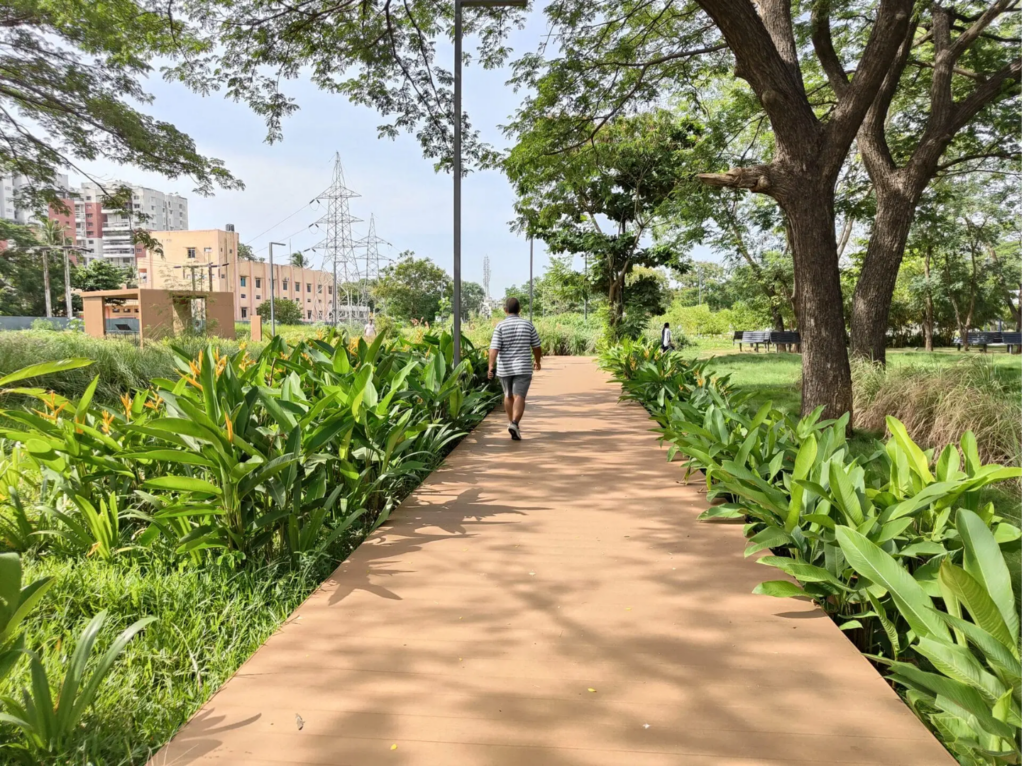
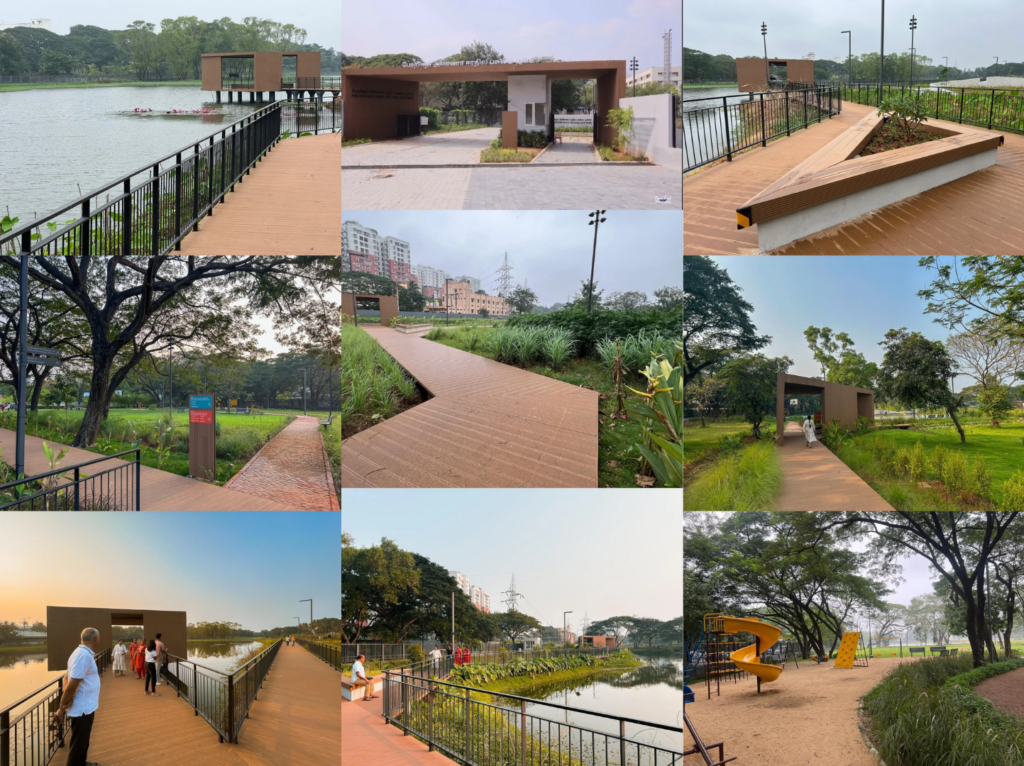
- A 600-metre boardwalk allowing visitors to experience wetland planting and bird habitats
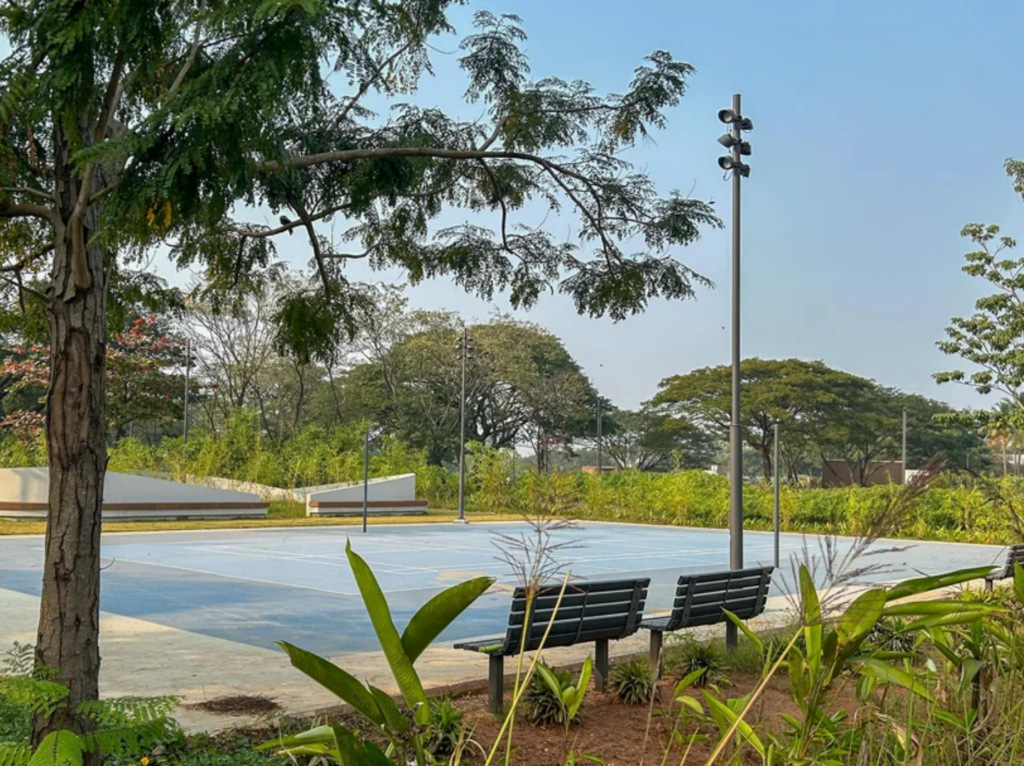
- Play courts, children’s areas, seating zones, and an outdoor gym
- Educational signage explaining urban wetlands and nature-based solutions
Boardwalks are elevated to allow water to flow beneath them during monsoon periods, ensuring hydro-ecological movement remains uninterrupted. During peak monsoon, maximum water levels remain below the boardwalk height, allowing safe public access for most of the year.Since opening, the park has attracted strong community engagement, with over 1,000 weekend visitors.
A Blueprint for Scaling Sponge Cities
Dr. M.S. Swaminathan Wetland Eco Park is Chennai’s first wetland sponge park and part of a broader resilience strategy. While the city has developed dozens of sponge parks, many are conventional retention ponds; Porur stands out for its holistic ecological restoration model.
The project was conceived and financed by the Chennai Metropolitan Development Authority (CMDA) and designed by Sponge Collaborative. It demonstrates that restoring degraded wetlands can simultaneously:
- Reduce flood risk
- Improve groundwater recharge
- Increase biodiversity
- Mitigate urban heat
- Provide inclusive public space
However, experts emphasise that one sponge park alone cannot solve Chennai’s water challenges. A network of wetlands, holding ponds, and blue-green corridors must work together across the city.
A Living Model of Water Resilience
The Porur sponge park shows what is possible when ecological design, governance, and community engagement converge.
In a city shaped by both floods and droughts, restoring wetlands is not nostalgia—it is strategy.
Chennai’s experience offers a powerful lesson for rapidly urbanising cities worldwide: resilience lies not in pushing water away, but in learning how to live with it.